







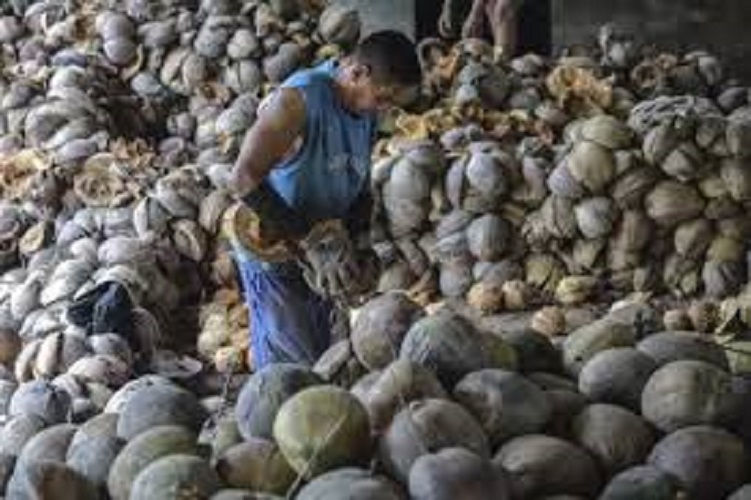
INTERNASIONAL,JS- German investors target coconut downstream industry in Tanjabtim, Indonesia. Discover how this high-value investment could boost exports, create jobs, and transform Jambi into a global coconut hub.
Tanjabtim Becomes a New Investment
The coconut industry in Tanjung Jabung Timur (Tanjabtim) has entered a new phase of global attention. German investors have started exploring large-scale investment opportunities in coconut downstream processing, signaling a major shift in Indonesia’s agricultural economy.
A delegation of investors from Germany, accompanied by technical experts and representatives from the Indonesian central government, recently conducted a direct visit to assess the region’s potential. This move reflects growing international confidence in Indonesia’s natural resources—especially coconut-based industries.
Moreover, this investment interest aligns with Indonesia’s broader strategy to accelerate downstream industrialization (hilirisasi), a key driver for increasing export value and reducing reliance on raw commodity sales.
Why Tanjabtim Attracts Global Investors
Tanjabtim offers more than just fertile land. The region boasts approximately 51,000 hectares of coconut plantations, making it one of the largest coconut-producing areas in Jambi Province.
This massive production capacity gives investors a consistent and scalable supply of raw materials—an essential factor for building sustainable industrial operations.
In addition, the geographical position of Tanjabtim supports export logistics. Its proximity to major shipping routes enhances efficiency in distributing processed coconut products to global markets, including Europe, the United States, and Asia.
High-Value Coconut Products Drive Investment Interest
German investors, represented by Philip Wallat, focus on transforming coconuts into high-value derivative products instead of selling them as raw commodities.
Key products under consideration include:
- Coconut oil (high-demand global commodity)
- Coconut milk and cream
- Coconut fiber (cocofiber) for industrial use
- Coconut shell charcoal and activated carbon
Interestingly, investors see coconut waste as a goldmine. They plan to convert byproducts like husks and shells into export-grade materials used in automotive, agriculture, and energy industries.
As a result, this approach significantly increases profit margins while minimizing environmental impact.
Research Phase: Ensuring Global Quality Standards
Currently, the investment process remains in the research and feasibility stage. Investors have transported coconut samples from Tanjabtim to Germany for laboratory testing and industrial evaluation.
They aim to analyze:
- Raw material quality and consistency
- Suitability for advanced processing technologies
- Export competitiveness in international markets
This step plays a critical role. It ensures that the final products meet strict European quality standards, which ultimately determines long-term success in global trade.
Economic Impact: From Local Farms to Global Supply Chains
If the project moves forward, it will deliver significant economic benefits across multiple sectors.
- Increased Farmer Income
Farmers will no longer depend on fluctuating raw coconut prices. Instead, they will supply raw materials to processing industries at more stable and higher prices.
- Job Creation
New factories and processing facilities will create thousands of jobs, ranging from production workers to logistics and management roles.
- Export Growth
Processed coconut products carry significantly higher value than raw exports. This shift will strengthen Indonesia’s position in the global coconut market.
- Regional Economic Growth
Tanjabtim could transform into an industrial hub, attracting further investments in infrastructure, logistics, and supporting industries.
Government Support: Fast-Track Investment Policy
Local authorities in Tanjabtim have taken a proactive stance. They actively promote investment opportunities and offer streamlined licensing processes to attract foreign investors.
Officials emphasize their commitment to providing a “red carpet” approach—ensuring fast approvals, regulatory clarity, and infrastructure support.
This strong government backing increases investor confidence and accelerates project realization.
Sustainable Industry: Circular Economy & Net Zero Vision
One of the most compelling aspects of this investment lies in its sustainability model.
German investors plan to implement:
Circular Economy System
They will utilize every part of the coconut, ensuring zero waste. Each component—from water to shell—will contribute to valuable products.
Net Zero Carbon Strategy
They will integrate eco-friendly technologies to reduce carbon emissions, aligning with global environmental standards.
This approach not only boosts efficiency but also enhances the global competitiveness of Indonesian products, especially in environmentally conscious markets.
Global Market Potential: A Multi-Billion Dollar Industry
The global demand for coconut-based products continues to grow rapidly, driven by:
- Rising health awareness (organic coconut oil, plant-based milk)
- Industrial demand (activated carbon, fiber materials)
- Sustainable product trends
With proper industrialization, Tanjabtim could export hundreds to thousands of containers annually, positioning itself as a major player in the global coconut supply chain.
Challenges That Need Attention
Despite its strong potential, several challenges remain:
- Infrastructure development (roads, ports, energy supply)
- Technology transfer and workforce training
- Regulatory consistency and investment security
Addressing these challenges will determine how quickly Tanjabtim can transition from a raw commodity region to an industrial powerhouse.
FAQ
- Why are German investors interested in Tanjabtim?
They see strong raw material supply, strategic location, and high global demand for coconut derivatives.
- What products will be developed?
Coconut oil, coconut milk, fiber products, and activated carbon from shells.
- Is the investment already confirmed?
Not yet. It is currently in the research and feasibility stage.
- How will this impact local farmers?
Farmers will gain better prices, stable demand, and long-term partnerships.
- Will the project be environmentally friendly?
Yes. Investors plan to implement circular economy and net-zero carbon systems.
Conclusion: A Turning Point for Jambi’s Economy
The interest from German investors marks a critical turning point for Jambi, particularly Tanjabtim.
This initiative has the potential to:
- Transform Jambi into a global coconut industry hub
- Increase regional GDP significantly
- Create sustainable economic growth
- Strengthen Indonesia’s export competitiveness
If stakeholders move quickly and strategically, Tanjabtim will not remain just a coconut-producing region. Instead, it will evolve into a high-value industrial center with global influence.(*)