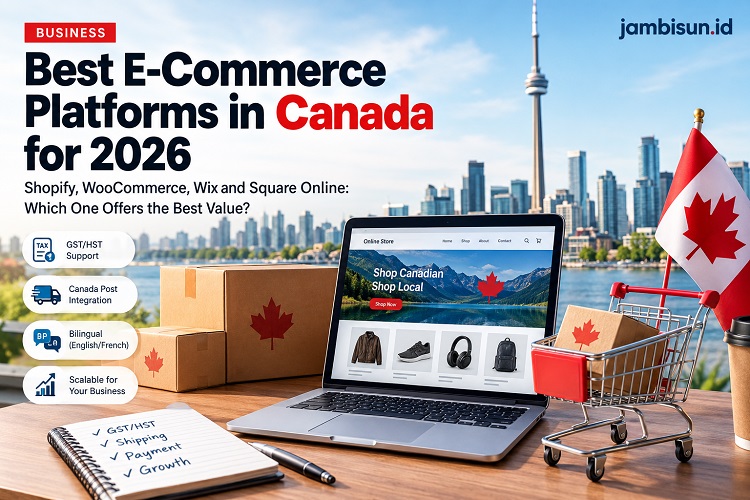
INTERNATIONAL,JS- Canada’s e-commerce market offers significant opportunities for entrepreneurs, small businesses and established retailers. However, choosing the right platform can determine how efficiently a business manages orders, calculates taxes, processes payments and reaches customers across the country.
Several platforms compete for Canadian online sellers, including Shopify, WooCommerce, Wix, Square Online and Panierdachat. Each option offers different advantages, from beginner-friendly website builders to flexible systems that give merchants greater control over their online stores.
Before launching an online business, sellers should consider more than the monthly subscription fee. They also need to evaluate payment processing costs, Canadian sales tax requirements, shipping integrations, website customization and the ability to serve customers in both English and French.
Here is a closer look at the leading e-commerce platforms for Canadian businesses in 2026 and the factors that can help merchants choose the right solution.
1. Shopify: A Strong Choice for Growing Online Businesses
Shopify stands out as a leading option for entrepreneurs who want to launch an online store without managing complicated technical systems. The company originated in Canada and maintains its headquarters in Ottawa, Ontario.
The platform combines website building, product management, payment processing, inventory tracking and order management in one system. Merchants can also connect their stores to social media channels and other sales platforms to reach more customers.
Shopify offers tools that help merchants manage Canadian sales taxes, including the Goods and Services Tax (GST) and the Harmonized Sales Tax (HST). However, sellers should configure the correct tax settings for their business and confirm their registration obligations.
Shipping integrations also help merchants organize deliveries through supported carriers and third-party applications. Businesses can explore Canada Post integrations to compare available shipping services and streamline order fulfillment.
Another advantage comes from Shopify’s extensive app marketplace. Sellers can add marketing tools, customer support features, product reviews and inventory management functions as their businesses expand.
However, subscription costs represent only part of the total expense. Merchants should also account for payment processing fees, paid applications and any additional services their stores require.
Best for: Entrepreneurs who want a straightforward setup, integrated selling tools and room to scale.
2. WooCommerce: Greater Control Over Your Online Store
WooCommerce offers a flexible alternative for business owners who prefer WordPress. The open-source e-commerce plugin allows merchants to transform a WordPress website into an online store without paying a standard WooCommerce platform subscription.
Businesses can customize product pages, manage inventory, publish articles and build search engine optimization strategies within the same website. This approach works particularly well for merchants who want to combine online sales with educational content, product guides and organic search traffic.
WooCommerce also provides access to extensions for Canadian tax calculations, shipping services and payment gateways. Merchants can select suitable integrations for GST/HST, Canada Post and other business requirements.
Nevertheless, WooCommerce requires more technical attention than a fully hosted platform. Store owners must budget for hosting, domain registration, security certificates, backups and ongoing maintenance. Premium themes and extensions can also increase operating expenses.
Security and performance require particular attention as order volumes grow. Merchants should maintain regular backups, update their software and select reliable hosting services.
Best for: WordPress users, content-driven businesses and merchants who value customization and control over their website.
3. Wix: An Accessible Platform for Small Businesses
Wix appeals to entrepreneurs who want to build a professional website without extensive coding knowledge. Its visual editor allows users to arrange page elements, customize layouts and create product pages through a drag-and-drop interface.
The platform supports online product sales, payment integrations, promotional campaigns and abandoned-cart recovery through eligible plans and features.
Small businesses can use Wix to establish a branded online presence without hiring a developer for every design change. Artists, independent retailers and service providers may also appreciate its selection of website templates.
However, businesses should review the available e-commerce features before choosing a subscription. Some payment options, integrations and advanced functions depend on the merchant’s plan and location.
Sellers should also verify Canadian tax settings, shipping integrations and bilingual capabilities before launch. A visually attractive website will not automatically meet every operational requirement.
Best for: Small businesses that prioritize simple website design, manageable setup and a professional online storefront.
4. Square Online: Connecting Physical Stores With Online Sales
Square Online offers a practical option for Canadian retailers that already operate physical stores, cafés or other local businesses.
Its main advantage comes from the connection between online sales and Square’s point-of-sale ecosystem. Eligible configurations can synchronize inventory and orders across digital and physical sales channels, helping merchants maintain more consistent stock information.
For example, a retailer can offer products online while continuing to serve customers inside a physical shop. A connected system can reduce manual inventory updates and make order management more convenient.
Square Online may also appeal to restaurants and local retailers that want to accept digital orders without building a highly customized website.
Some entry-level options may reduce upfront software costs. However, merchants should review payment processing charges, plan limitations, shipping features and available integrations before comparing the total cost with competing platforms.
Best for: Local retailers, restaurants and businesses that want to coordinate in-store and online operations.
5. Panierdachat: An Option for English and French Markets
Panierdachat, a Canadian e-commerce platform associated with Quebec, deserves consideration from businesses that want to reach French-speaking and English-speaking customers.
Bilingual functionality can play an important role for merchants targeting Quebec. A store that presents product information, navigation and customer-facing content in both languages can provide a more accessible shopping experience.
Businesses should examine how each platform handles translated product descriptions, checkout pages, customer emails and other essential store elements. Translation requirements can extend beyond the homepage, especially when a merchant operates a large product catalog.
Panierdachat also targets Canadian merchants who want e-commerce tools suited to local business requirements. However, sellers should confirm the current availability of specific tax, payment and shipping integrations before committing to a plan.
The platform may appeal to merchants who prioritize local market considerations over access to the largest possible international app ecosystem.
Best for: Businesses targeting Quebec and merchants who prioritize French-English storefront capabilities.
6. How Much Does an E-Commerce Platform Cost in Canada?
Monthly subscription prices provide a useful starting point, but they do not tell the whole story. A store’s total operating cost depends on its payment methods, order volume, hosting requirements and additional software.
WooCommerce offers a free core plugin, but merchants must cover hosting and other operating expenses. Shopify and Wix charge subscription fees for their hosted services, while Square Online offers different options depending on the features a business needs.
Panierdachat also provides plans that merchants should compare against their required features and sales volume.
Before making a decision, calculate the following expenses:
- Monthly subscription: The recurring cost of accessing the platform and its core features.
- Payment processing: Fees that apply when customers pay through supported payment providers.
- Shipping: Carrier charges, packaging materials and any shipping software subscriptions.
- Website maintenance: Hosting, security, backups, themes and technical support where applicable.
- Marketing: Advertising, email campaigns, analytics and other customer acquisition tools.
- Tax compliance: Software or professional assistance when a business needs additional support with Canadian tax obligations.
Merchants should check current Canadian pricing directly with each provider. Promotions, billing terms, exchange rates and plan changes can affect the final amount.
7. GST/HST and Canada Post: Two Important Considerations
Canadian online sellers need to understand their tax obligations before accepting orders. GST/HST requirements can depend on factors such as business activities, revenue, registration status and the province or territory involved.
A platform may calculate taxes at checkout, but that feature does not determine whether a business must register, file returns or remit tax. Merchants should review guidance from the Canada Revenue Agency and seek professional advice when their circumstances require it.
Shipping deserves similar attention. Canada Post integrations can help eligible merchants access shipping services, generate labels and manage fulfillment through supported applications or platform features.
However, integration availability and functionality vary. Sellers should confirm whether their preferred platform supports the shipping workflow they need, including domestic delivery, international orders and tracking notifications.
Businesses that sell across provincial borders should also evaluate delivery costs and customer expectations before setting their shipping policies.
8. What About Selling in Both English and French?
Language support matters most when a business serves customers with different language preferences or targets Quebec.
A bilingual strategy should cover more than product descriptions. Merchants should consider navigation menus, checkout instructions, customer service messages, shipping policies and transactional emails.
They should also verify whether their chosen platform supports localized URLs, translated metadata and language-specific search optimization.
For businesses operating in Quebec, applicable French-language requirements may affect commercial websites and customer communications. Sellers should consult current provincial guidance or qualified legal advice to understand the rules that apply to their business.
Shopify, WooCommerce, Wix and other platforms may support multilingual storefronts through built-in features, extensions or third-party services. The setup, costs and degree of translation control can differ significantly.
Which E-Commerce Platform Should You Choose?
The best platform depends on your business model, technical experience and long-term plans.
Shopify offers a strong starting point for entrepreneurs who want an integrated selling system. WooCommerce suits merchants who prefer WordPress and greater control over customization. Wix works well for small businesses that prioritize visual design, while Square Online can help physical retailers connect their digital and in-store operations.
Panierdachat deserves a closer look from merchants who focus on Quebec and bilingual commerce.
Before committing, compare the current subscription prices, payment fees, tax tools, shipping integrations and language capabilities of your shortlisted platforms. Test the checkout process and calculate the total cost of running the store rather than focusing exclusively on the advertised monthly fee.
A suitable platform can simplify daily operations and support future growth. However, long-term success also depends on product quality, competitive pricing, reliable fulfillment, customer service and a marketing strategy that attracts the right buyers.(*)