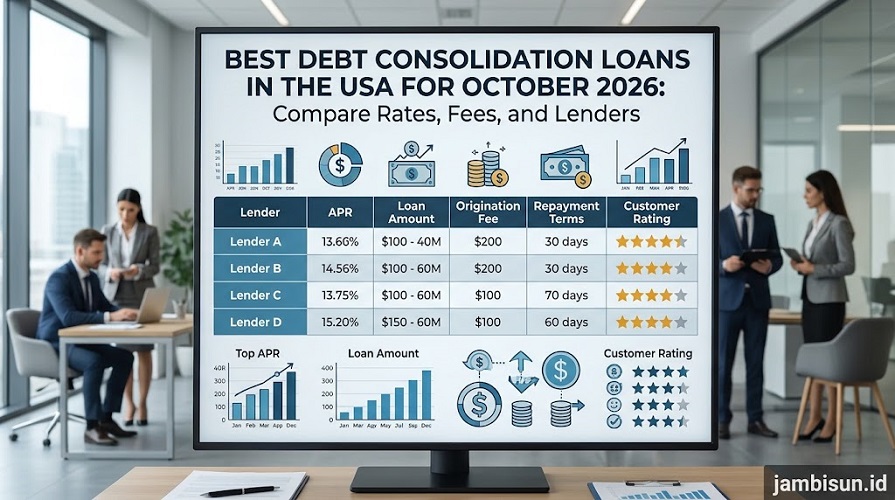
INTERNATIONAL,JS- Americans who struggle with multiple high-interest debts may consider a debt consolidation loan to simplify their monthly payments and manage repayment more effectively. This type of personal loan combines several outstanding balances into one new loan, potentially giving borrowers a lower annual percentage rate (APR) and a more predictable repayment schedule.
Credit card balances, medical bills, and other eligible personal debts can place considerable pressure on household budgets. Instead of tracking several due dates and interest charges, borrowers can use a consolidation loan to create one repayment plan.
However, consolidation does not automatically reduce borrowing costs. The final outcome depends on the new loan’s APR, fees, repayment term, and the borrower’s financial situation.
According to loan comparisons published in October 2026, several US lenders offer debt consolidation products with advertised APRs starting around 6%. Some lenders also provide loan amounts of up to $100,000 for eligible applicants. Actual offers vary according to creditworthiness, income, outstanding obligations, and other underwriting factors. Sources: CNBC Select and NerdWallet.
How Does a Debt Consolidation Loan Work?
A debt consolidation loan replaces several existing debts with a single new loan. The borrower then makes regular payments toward the new balance under the lender’s agreed terms.
For example, someone who owes money on three credit cards may apply for a personal loan large enough to cover those balances. After approval, the borrower can use the funds to pay the card issuers, subject to the loan agreement and the lender’s payment procedures.
The main objective involves improving debt management. Borrowers may also reduce interest expenses when the new loan offers a lower APR than their existing accounts.
Nevertheless, applicants should compare the total repayment cost rather than focus exclusively on the advertised monthly payment. A longer repayment period can reduce each monthly installment while increasing the total interest paid over the life of the loan.
Best Debt Consolidation Lenders to Compare in October 2026
Several lenders serve different borrowing needs in the US market. The following options provide a starting point for consumers who want to compare loan amounts, advertised APRs, and eligibility requirements.
1. Happen Bank: A Debt Consolidation Option for Qualified Borrowers
Happen Bank, formerly known as LendingClub, offers personal loans for debt consolidation and other eligible purposes.
NerdWallet lists an estimated APR range of 5.96% to 35.99% and loan amounts from $1,000 to $75,000. The lender also offers direct payment to creditors and joint applications for eligible borrowers.
These features may appeal to consumers who want to combine several balances under one repayment plan. However, the lowest advertised APR applies only to applicants who meet the lender’s qualification standards.
Before applying, borrowers should review the origination fee, repayment term, and final loan offer.
2. SoFi: Loans for Larger Debt Balances
SoFi may suit borrowers who need a larger personal loan and have a strong credit profile.
Its published terms list loan amounts from $5,000 to $100,000, with fixed APRs ranging from 6.99% to 35.49% under specified discount conditions. Repayment terms generally range from two to seven years, depending on the offer.
Still, borrowers should compare the complete offer, including any origination fee, before deciding whether SoFi provides better value than competing lenders.
3. Upgrade: An Option for Different Credit Profiles
Upgrade offers personal loans that eligible borrowers can use to consolidate debt. Its published APR range starts at 7.74% and reaches 35.99%, while loan amounts generally range from $1,000 to $50,000.
Some comparison platforms report a minimum credit score of 600 for Upgrade. However, meeting that benchmark does not guarantee approval because the lender also considers income, existing debt, and other application details.
Applicants should check the origination fee carefully because it can reduce the amount they actually receive.
4. Happy Money: Focused on Credit Card Debt
Happy Money focuses on personal loans designed to help eligible borrowers consolidate credit card balances.
CNBC Select lists loan amounts from $5,000 to $50,000 and APRs ranging from 8.95% to 35.99%. Eligible borrowers can choose from available repayment terms, with options extending up to 84 months under the published offer.
This lender may interest consumers who want to replace several credit card payments with one scheduled installment.
However, applicants should confirm which debts qualify and whether the new loan will cost less than their existing card balances. A consolidation loan may not deliver savings when its APR and fees exceed the cost of the current debt.
Note: Rates, loan limits, fees, and eligibility criteria can change. Check each lender’s official website for current terms before submitting an application.
Debt Consolidation Loan Comparison Table
| Lender | Advertised APR | Loan Amount | Potential Advantage |
|---|---|---|---|
| Happen Bank | 5.96%–35.99% | $1,000–$75,000 | Direct creditor payments and joint applications |
| SoFi | 6.99%–35.49% | $5,000–$100,000 | Larger loan amounts and potential rate discounts |
| Upgrade | 7.74%–35.99% | $1,000–$50,000 | Flexible loan sizes and payment features |
| Happy Money | 8.95%–35.99% | $5,000–$50,000 | Credit card debt consolidation focus |
Source: Published lender terms and October 2026 loan comparisons from NerdWallet, CNBC Select, and LendingTree. Advertised APRs do not represent guaranteed offers, and lenders may apply different terms by state and applicant.
What Credit Score Do You Need for a Debt Consolidation Loan?
A credit score can influence approval decisions, interest rates, and available loan amounts. In general, applicants with stronger credit profiles have better access to competitive offers.
Borrowers with scores around 700 or higher may qualify for more attractive terms, depending on their income, payment history, and existing debt. Applicants with scores around 600 may still find options, but lenders may charge higher rates or impose additional conditions.
A credit score alone does not determine eligibility. Lenders may also examine debt-to-income ratio, employment or income stability, and recent credit applications.
Before shopping for a loan, review your credit reports and correct any errors. Then compare offers from multiple lenders to identify the most affordable option.
How to Compare APRs, Fees, and Monthly Payments
The advertised interest rate does not tell the whole story. Borrowers should compare the annual percentage rate, or APR, because it incorporates the interest rate and certain loan fees.
For example, a lender may advertise a relatively low interest rate but charge a substantial origination fee. That fee can reduce the funds available to repay existing creditors while increasing the overall borrowing cost.
Consider these steps before signing a loan agreement:
- Compare APRs: Review offers from multiple lenders using the same borrowing amount and a similar repayment period.
- Check origination fees: Determine whether the lender deducts the fee from the loan proceeds.
- Calculate total repayment: Add the scheduled payments to understand the total amount you will pay.
- Review the repayment term: Compare shorter and longer terms to see how they affect monthly payments and total interest.
- Check prepayment rules: Confirm whether the lender charges a penalty for early repayment.
- Verify direct payment: Ask whether the lender sends funds to creditors or deposits them into your account.
The Consumer Financial Protection Bureau explains that APR provides a broader measure of borrowing costs than the interest rate alone. Consumers can use APR comparisons to evaluate competing credit offers more effectively.
Read the CFPB’s explanation of interest rates and APR before making a final decision.
How to Estimate Your Monthly Loan Payment
A loan calculator can help you estimate your monthly installment before you apply. To illustrate, consider a hypothetical $10,000 loan with a fixed 12% annual interest rate and a 36-month repayment period.
Under a standard amortizing repayment schedule, the monthly payment would come to approximately $332.14. Total payments would reach about $11,957, excluding any additional fees.
This example serves only as an illustration. It does not represent an offer from any lender, and your actual payment may differ.
A longer repayment period can lower the monthly installment, but it usually increases total interest costs. Therefore, choose a payment that fits your budget without unnecessarily extending the debt.
Can Debt Consolidation Improve Your Credit Score?
Debt consolidation may help borrowers manage their credit more effectively, but it does not guarantee a higher score.
Paying off credit card balances can reduce credit utilization, which may benefit a credit score. Making every new loan payment on time can also support a healthier credit history.
However, applying for new credit may temporarily affect a score. In addition, keeping old credit cards active and building new balances after consolidation can undermine the benefits.
Borrowers should avoid treating a consolidation loan as additional spending money. Instead, establish a realistic budget, limit unnecessary credit card purchases, and prioritize timely payments.
Risks Borrowers Should Consider Before Applying
Although debt consolidation can simplify repayment, it does not eliminate the underlying debt. Borrowers still need enough income to meet the new monthly obligation.
A high APR can make consolidation more expensive than the original debt. Origination fees can also reduce potential savings, while a longer repayment term may increase total interest.
Some borrowers may benefit more from a nonprofit credit counseling agency or a debt management plan. These alternatives can help consumers review their finances and explore repayment arrangements without automatically taking out another loan.
Borrowers should also distinguish debt consolidation from debt settlement. Consolidation replaces multiple balances with a new loan, while debt settlement generally involves negotiating with creditors to accept less than the full amount owed. The two strategies carry different costs and risks.
Frequently Asked Questions
Is a debt consolidation loan worth it in 2026?
It may be worthwhile when the new loan offers a lower APR, reasonable fees, and a manageable repayment schedule. Compare the total cost with your current debts before applying.
What is the lowest APR available for debt consolidation loans?
Some lenders advertise starting APRs near 6%. However, only highly qualified applicants may receive the lowest rates, and actual offers vary by lender and borrower.
Can I get a debt consolidation loan with a 600 credit score?
Some lenders list minimum credit score requirements around 600. Nevertheless, approval depends on other factors, including income, debt obligations, and credit history.
Does prequalification affect my credit score?
Many lenders offer prequalification through a soft credit inquiry, which generally does not affect your credit score. A formal application may trigger a hard inquiry, so check the lender’s process before proceeding.
Will debt consolidation erase my credit card debt?
No. The loan pays off eligible existing balances and replaces them with a new obligation. You must continue making payments until you repay the new loan in full.
Conclusion
Debt consolidation loans can give US consumers a more organized way to manage multiple high-interest balances. Happen Bank, SoFi, Upgrade, and Happy Money offer options for different borrowing needs, credit profiles, and loan amounts.
However, borrowers should not choose a lender based on the lowest advertised APR alone. Compare fees, monthly payments, repayment terms, and total borrowing costs before committing.
A careful comparison, combined with a realistic budget and consistent payments, can help borrowers make better-informed decisions about their debt repayment strategy.
Disclaimer: This article provides general educational information, not individualized financial advice. Lender terms may change, and approval is never guaranteed. Verify all loan details directly with the lender before applying.(*)