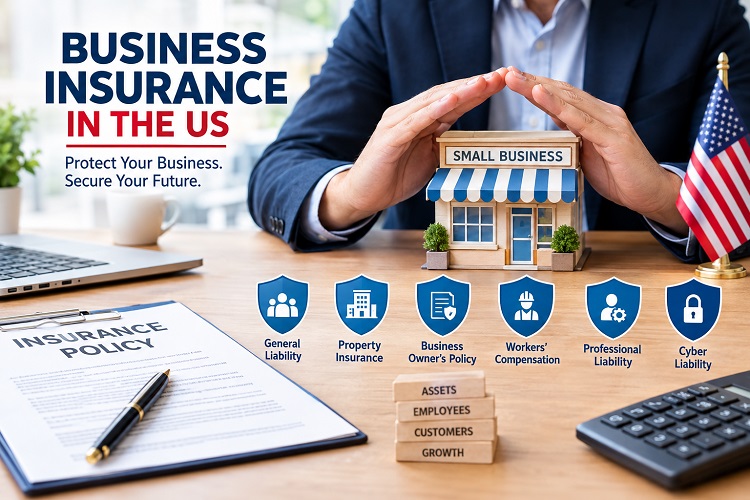
INTERNATIONAL,JS- Running a business in the United States offers opportunities for growth, but it also exposes owners to financial risks. A customer could suffer an injury on business premises, a fire could damage valuable equipment, or a cyberattack could expose confidential customer information. Without suitable insurance, a single incident could create significant expenses and disrupt daily operations.
Business insurance helps companies manage these risks through policies that cover specific losses, legal claims, and operational disruptions. However, business owners need to understand their coverage options before choosing a policy because insurers apply different terms, exclusions, limits, and deductibles.
According to Forbes Advisor, a Business Owner’s Policy (BOP) costs an average of approximately $57 per month for small businesses in its pricing analysis. Actual premiums vary by industry, location, coverage limits, business size, and claims history.
For small business owners, the goal should not simply be to find the cheapest policy. Instead, they should compare coverage, identify their most significant risks, and select protection that fits their operations and budget.
1. General Liability Insurance Protects Against Third-Party Claims
General liability insurance helps businesses manage claims involving third-party bodily injuries, property damage, and certain personal or advertising injuries.
For example, imagine a customer slips on a wet floor inside a retail store and seeks compensation for medical expenses. The business could face legal costs and a potential settlement. A suitable liability policy may cover eligible expenses, subject to its terms and limits.
This coverage can benefit retailers, restaurants, contractors, cleaning companies, and other businesses that interact with customers or work at client locations.
However, general liability insurance does not cover every business risk. It typically excludes employee injuries, professional mistakes, and damage to the business owner’s own property. Companies may need separate policies to address those exposures.
Business owners should review the policy’s coverage limits and exclusions before purchasing protection.
2. Commercial Property Insurance Covers Physical Assets
Commercial property insurance helps protect the physical assets a business owns or uses. Depending on the policy, covered property may include buildings, office furniture, computers, machinery, inventory, and other business equipment.
A fire, theft, or certain weather-related events could damage these assets and force a company to spend money on repairs or replacements. Commercial property insurance may help cover eligible losses when the event falls within the policy’s terms.
Business owners should pay close attention to the difference between replacement-cost coverage and actual-cash-value coverage. Replacement-cost coverage generally focuses on the cost of replacing covered property with comparable property, while actual-cash-value coverage accounts for depreciation.
Insurers also apply exclusions and special conditions. For instance, a standard policy may not cover every type of flood damage or earthquake loss.
Companies should therefore evaluate their location, inventory value, equipment costs, and exposure to natural disasters before selecting a policy.
3. A Business Owner’s Policy Can Combine Essential Coverage
A Business Owner’s Policy, commonly known as a BOP, combines general liability and commercial property coverage into one insurance package. Depending on the insurer and policy, businesses may also obtain business interruption coverage or other optional protections.
This arrangement can simplify insurance management for eligible small businesses. Instead of purchasing separate policies for every covered risk, owners can obtain several forms of protection through one package.
Business interruption coverage may help replace eligible lost income and cover certain continuing expenses when a covered property loss temporarily prevents normal operations. The policy usually requires a qualifying event and may impose a waiting period or other conditions.
For example, a small restaurant might need to close temporarily after a covered fire damages its kitchen. A BOP with suitable business interruption protection could help the owner manage certain financial losses during the recovery period.
Nevertheless, a BOP does not automatically cover every risk. Professional liability, workers’ compensation, commercial auto, and certain cyber risks may require separate policies or endorsements.
Business owners should compare the package’s total cost with the cost of individual policies to determine which option provides better value.
4. Workers’ Compensation Insurance Helps Cover Employee Injuries
Workers’ compensation insurance helps employers manage the financial consequences of qualifying work-related injuries and illnesses. Depending on state law and the policy, benefits may include medical expenses, partial wage replacement, and rehabilitation costs.
Many US states require employers to carry workers’ compensation insurance once they meet specific employment or business criteria. However, the rules differ across jurisdictions. Some states provide exceptions for certain industries, business owners, or small employers.
For that reason, business owners should check the requirements in every state where they employ workers.
A construction company, for example, faces different workplace hazards from a software consultancy. Insurers consider factors such as job duties, payroll, industry classification, and claims history when calculating premiums.
Employers should also maintain appropriate workplace safety procedures and accurate employment records. These steps can help them manage workplace risks and prepare for insurance reviews.
Workers’ compensation generally does not replace general liability insurance because the two policies address different exposures.
5. Professional Liability Insurance Covers Certain Work-Related Errors
Professional liability insurance, also called Errors and Omissions (E&O) insurance, helps protect businesses that provide professional services or advice.
A client could claim that a consultant delivered incorrect advice, a technology provider failed to meet agreed requirements, or a professional made an error that caused financial losses. Depending on the policy, E&O insurance may cover eligible defense costs and damages arising from covered claims.
Consultants, accountants, marketing agencies, IT service providers, and other professional businesses may benefit from this coverage.
Some professions and contracts require specific liability protection. However, business owners should not assume that every service provider faces the same legal requirements. They should verify applicable regulations, licensing rules, and contractual obligations.
Professional liability insurance also differs from general liability coverage. While general liability typically addresses certain bodily injury and property damage claims, E&O insurance focuses on claims involving professional services.
Before buying a policy, business owners should review coverage limits, exclusions, retroactive dates, and reporting requirements. These details can significantly affect how a policy responds to a claim.
6. Cyber Liability Insurance Addresses Digital Risks
Cyber liability insurance has become an important consideration for businesses that store customer information, process online payments, or rely on digital systems.
A cyber incident could expose customer records, interrupt business operations, or create expenses related to investigation and recovery. Depending on the policy, cyber insurance may cover eligible incident response services, data recovery expenses, business interruption losses, and certain third-party claims.
Small businesses can face these risks even when they lack a large technology department. Criminals may target businesses with weak passwords, outdated software, or inadequate security procedures.
However, cyber insurance does not eliminate the need for cybersecurity measures. Businesses should use multifactor authentication, maintain secure backups, update software, and train employees to recognize suspicious messages.
Policyholders should also examine exclusions, waiting periods, incident notification requirements, and coverage for ransomware-related losses. Insurers may impose security conditions or restrict certain types of claims.
A business that handles sensitive customer information should compare cyber policies carefully rather than assuming that a general commercial policy provides sufficient protection.
How Much Does Business Insurance Cost in the US?
Insurance premiums depend on the company’s risk profile and the protection it purchases. Forbes Advisor reports an average BOP cost of about $57 per month in its small-business insurance analysis, but that figure does not represent a guaranteed price for every company.
Several factors can influence the final premium:
- Industry: Construction and other high-risk operations may face higher premiums than some office-based businesses.
- Location: State regulations, local hazards, and regional claim patterns can affect pricing.
- Business size: Payroll, revenue, property values, and employee numbers may influence underwriting.
- Coverage limits: Higher limits can increase premiums.
- Deductibles: A higher deductible may reduce premiums but increase the amount the business pays after a covered loss.
- Claims history: Previous claims may affect an insurer’s assessment of risk.
Business owners should request quotes from multiple insurers or licensed brokers. They should compare the same coverage limits, deductibles, and major exclusions to make the comparison meaningful.
The lowest quoted premium may not offer the strongest financial protection.
Leading Business Insurance Providers in the United States
Several established companies and insurance intermediaries offer commercial coverage in the US. Business owners should assess each provider based on their industry, location, coverage needs, and eligibility.
Chubb offers commercial insurance solutions for businesses of different sizes and across various industries. Prospective customers can review available options through its official business insurance website.
Allianz Commercial provides commercial insurance and risk management solutions, with offerings that may suit organizations facing specialized or complex risks. Businesses can explore its US-related information through the Allianz Commercial website.
USA Business Insurance Services provides access to commercial insurance solutions for various business categories. Owners can review its offerings and contact information at BusinessInsuranceUSA.com.
Availability, eligibility, policy terms, and licensing arrangements can vary. Business owners should verify the provider’s current offerings and confirm that the insurer or broker can serve their state and business type.
Five Steps to Choose the Right Business Insurance
Choosing suitable coverage requires more than comparing monthly premiums. Business owners can follow these five steps to make a more informed decision.
First, identify the main risks. Review the company’s property, customer interactions, professional services, employee activities, and use of digital systems.
Second, check legal and contractual requirements. State laws, commercial leases, client agreements, and lender requirements may determine which policies the business needs.
Third, compare multiple quotes. Request proposals from insurers or licensed brokers and evaluate the coverage details rather than relying solely on the quoted price.
Fourth, read exclusions and deductibles. Confirm which events the policy covers, which losses it excludes, and how much the business must pay before insurance benefits apply.
Fifth, review coverage annually. Revenue growth, new employees, additional equipment, expanded services, and changes in business locations can create new insurance needs.
Owners should also update their policies after major operational changes instead of waiting for the annual renewal.
Frequently Asked Questions About Business Insurance
Is business insurance mandatory in every US state?
No. Requirements depend on the type of insurance, state law, industry, and business circumstances. Workers’ compensation rules vary by state, while other policies may become necessary under contracts, licensing rules, or financing arrangements.
Can a small business operate with only general liability insurance?
Some businesses may begin with general liability coverage, but that policy does not address every risk. Owners may also need property, professional liability, cyber, workers’ compensation, or commercial auto insurance.
Does a BOP include workers’ compensation?
A standard Business Owner’s Policy generally combines general liability and commercial property coverage. Workers’ compensation usually requires a separate policy.
How can a business reduce insurance costs?
Owners can compare quotes, select appropriate deductibles, maintain safety procedures, improve cybersecurity, and regularly review coverage limits. They should avoid reducing essential protection simply to obtain a lower premium.
The Bottom Line
Business insurance can help US companies manage unexpected expenses, legal claims, property damage, and operational disruptions. General liability, commercial property, BOP, workers’ compensation, professional liability, and cyber insurance address different risks, so no single policy suits every business.
Small business owners should begin by identifying their most significant exposures, checking applicable legal requirements, and comparing policies from qualified insurers or licensed brokers.
Although an average BOP price of approximately $57 per month provides a useful starting point, the actual cost depends on the business’s circumstances and chosen coverage. A careful comparison can help owners balance affordability with the protection their operations require.(*)